
The government, under the Finance Act, 2020, had allowed tax exemption for SWFs and pension funds in the case of incomes from investment in 34 key infrastructure sectors, including hotels, cold chains, educational institutions, hospitals, and gas pipelines.

'The US is strongly placed to expand its crude supplies to India.'

Fundraising by Indian companies through equity and debt reached an all-time high in the financial year 2024-25 (FY25), according to data collated by primedatabase.com. Fundraising through debt stood at Rs 11.1 trillion in FY25, including contributions from InvITs (infrastructure investment trusts) and REITs (real estate investment trusts).

'It is typical of China's strategic deception of making virtue out of necessity,' observes Rup Narayan Das.

From highways connecting once-remote regions to aviation networks carrying millions, India's infrastructure story is one of transformation.

'In the past six months, capital markets have seen a dip, and realty is struggling. The stock-market investor will be cautious of putting that investment in real estate when there may be a slowdown coming.'
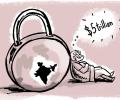
In order to achieve $5 trillion GDP by FY'25, India needs to spend about $1.4 trillion over this period on infrastructure, according to the Economic Survey. During financial years 2008-17, India pumped in about $1.1 trillion on infrastructure. However, the challenge is to step up infrastructure investment substantially, the Economic Survey 2021-22 said.

Referring to visible indicators of green shoots, the finance minister said the forex reserve is at an all time high and the stock market is upbeat.

The government on Wednesday announced the appointment of veteran banker K V Kamath as chairperson of the newly set up Rs 20,000 crore development finance institution NaBFID to catalyse investment in the funds-starved infrastructure sector. Parliament had in March cleared the National Bank for Financing Infrastructure and Development (NaBFID) Bill 2021 to support the development of long-term non-recourse infrastructure financing in India, including the development of the bonds and derivatives markets necessary for infrastructure financing.

Expressing commitment to augment the country's infrastructure, Finance Minister Nirmala Sitharaman on Monday proposed to significantly enhance capital expenditure to Rs 5.54 lakh crore in the next fiscal, besides creating institutional structures and giving a big thrust to monetizing assets to achieve the goals of the National Infrastructure Pipeline (NIP). Sitharaman said NIP, that was launched in December 2019 with 6,835 projects, has now been expanded to 7,400 projects and around 217 projects worth Rs 1.10 lakh crore under some key infrastructure ministries have been completed. "For 2021-22, I propose a sharp increase in capital expenditure and thus have provided Rs 5.54 lakh crores which is 34.5% more than the BE of 2020-21," the finance minister said.

India's flexible (flex) office segment, having breached pre-pandemic levels, is thriving as corporates, startups, multinational corporations, and global capability centres (GCCs) expand in India, seeking low-capital yet Grade A plug-and-play facilities. In the first quarter (Q1) of 2025, the flex office segment continued to grow, with flex space leasing rising by 22 per cent to 2.2 million square feet (msf), according to Colliers.

Putin is keen on establishing a good personal rapport with Trump and anchor a meaningful US-Russia partnership, realistic enough to accept that Trump is as good an American president as Russia would ever get, observes Ambassador M K Bhadrakumar.

Reliance Industries Ltd (RIL) has opposed the proposal of a new pipeline from Kakinada to Srikakulam floated by Andhra Pradesh Gas Infrastructure Corporation (APGIC). RIL has argued that gas availability for the pipeline is uncertain and will not contribute to the development of a national gas grid.

The National Highways Authority of India (NHAI) is looking to monetise 33 stretches of national highways during the current financial year (FY25) through its toll operate transfer (TOT) and infrastructure investment trust (Invit). These stretches include Lucknow-Aligarh, Kanpur-Ayodhya-Gorakhpur, and Bareilly-Sitapur in Uttar Pradesh, Gurugram-Kotputli-Jaipur bypass and Jaipur-Kishangarh in Rajasthan, Panikoili-Rimuli in Odisha, Chennai Bypass in Tamil Nadu, and Muzaffarpur-Darbhanga-Purnia highway in Bihar. Cumulatively, the 33 stretches, spanning 2,741 kilometres (km) earned approximately Rs 5,000 crore revenue in FY24.

Making a case for an optimal fiscal stance, the Economic Survey on Friday said growth leads to debt sustainability and not necessarily vice-versa. "This is because debt sustainability depends on the 'Interest Rate Growth Rate Differential' (IRGD) i.e. the difference between the interest rate and the growth rate in an economy. "With the Indian context of potential high growth, the interest rate on debt paid by the Indian government has been less than India's growth rate by norm, not by exception," it said.
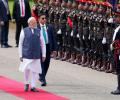
'Granting the country's highest civilian honour to Prime Minister Modi was surprising as it indicated the government was going out of its way to have India as a close partner.'

'They are also sitting on huge public sector assets without many returns.'

Given the high priority accorded to the manufacturing sector, several policy initiatives around the theme of Atmanirbhar Bharat have been set in motion to address its competitiveness and growth. Some notable examples include the PLI scheme and the employment-linked incentive scheme announced in the recent Union Budget. The Budget also announced the setting up of 12 industrial parks under the National Industrial Corridor Development Programme (NICDP).

Finance Minister Nirmala Sitharaman on Tuesday said the upcoming Budget for 2021-22 will sustain the momentum of public spending on infrastructure and have a "vibrancy" to ensure the economic revival continues. She also said the pace of divestment, which has been hit by the COVID-19 pandemic, will pick up in the coming months. "We shall definitely sustain the momentum of public spending in infrastructure. Because that is the one way we assure that the multipliers will work and the economy's revival will be sustainable.... "I am conscious that the forthcoming Budget will have a vibrancy that is so required for the economy's revival, sustainable revival," she said at the Assocham Foundation Week. The Budget for the 2021-22 fiscal is expected to be tabled in Parliament on February 1.

The Centre's capital expenditure (capex) outlay for the April-June quarter (first quarter, or Q1) of 2022-23 (FY23) could be close to Rs 1.5 trillion, Business Standard has learnt. As a percentage of full-year capex Budget Estimates (BE) of Rs 7.5 trillion, this could be at similar levels to the trends in the past few fiscal years. It is in the July-September quarter (Q2) of FY23 that capex is expected to pick up, when a bulk of the long-term capex loans to states are expected to be expended.

State-owned Indian Strategic Petroleum Reserves Ltd (ISPRL), which operates India's strategic crude oil storage, will make awards by December to lease around 1 million tons of crude oil storage space (7.3 million barrels) at two of the country's three existing Strategic Petroleum Reserves (SPRs), around a fifth of the total SPR capacity. This will enable the refilling of crude caverns even as escalating hostilities in the Gulf threaten disruptions in crude supplies, two industry sources said.
It would be a difficult task for the Indian economy to reach the $5-trillion mark a year before the International Monetary Fund (IMF) projection of 2026-27. Pankaj Chaudhary, minister of state for finance, said in the Rajya Sabha on Tuesday that the government is taking steps to make the country a $5-trillion economy at a date earlier than the IMF's projection. In that context, it would not be difficult to meet the projection in the third quarter of FY27.
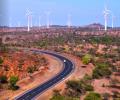
Road awards were muted in Q1FY25. But the pace will accelerate with a bidding pipeline of Rs 1.1 trillion (September 2024), mostly dominated by HAM (Hybrid Annuity Model) projects, which contribute 47 per cent and engineering procurement and construction or EPC projects, which have about 36 per cent share. Hence, infrastructure companies mostly reported revenue decline on a year-on-year (Y-o-Y) basis in Q1FY25.

Industry players believe the new DFI model will be initially risk capital, which will then be used to mobilise additional resources from development agencies such as World Bank.

Finance Minister Nirmala Sitharaman had in May announced that there will be a maximum of four public sector companies in strategic sectors, and state-owned firms in other segments will eventually be privatised.

The regulator is more carefully scrutinising applications by infrastructure investment vehicles that have a limited number of investors. They have been asked to broaden their investor base before application approval, according to two people familiar with the matter. The Securities and Exchange Board of India is concerned about the structure being used for getting around tax requirements, according to one of the sources.

'Consider your household's financial health and all your other goals.' 'Buying a house might seem like an urgent goal, but it is rarely the only one.'

If 4,000 workers could work round the clock for the construction of the new Parliament building, then there is no reason why all infrastructure projects too cannot follow that model, asserts Dr Sudhir Bisht.

This month, advertisements for managing directors and the senior management team for the National Bank for Financing Infrastructure and Development or NaBFID, should be out, signalling the start of a financial institution (FI) like no other the country has ever had. For this and other reasons government managers associated with the NaBFID project are convinced it should remain a 100 per cent government-owned entity. This is somewhat different from what former economic affairs secretary Tarun Bajaj said when the NaBFID Bill was being tabled in Parliament earlier this year: "To begin with, it will be 100 per cent government owned.

Re-instatement of 5% custom duty on crude imports will help.

'Those betting against PSUs will likely be punished in this upswing.'

Prime Minister Narendra Modi began his engagements in the US on Thursday by meeting with leading American CEOs from five different key sectors and highlighted the economic opportunities in India.

The challenges before the coming Budget are more daunting than those in 2021, reveals A K Bhattacharya.

Ailing telecom operator Vodafone Idea has flagged the industry's "unsustainable financial duress" in its latest annual report and hoped that the government would provide the necessary support to address "all structural issues" faced by the sector. In the chairman's letter to shareholders, Himanshu Kapania cited persistent challenges in the operating environment, amid "unsustainable pricing" and "hyper-competition" during FY21. Kapania expressed hope that government will support efforts to generate reasonable returns on massive investments.

India's inclusion in JP Morgan's bond index can channel billions of dollars into India. How will the government securities market handle it?

The Hub will contribute to developing a knowledge-sharing platform and network between govts, the private sector, development banks and other international organisations

The Centre's ambitious Rs 6-trillion National Monetisation Pipeline (NMP) could fall short of yearly targets for the current fiscal year (FY22) and the next one as well (FY23), partly due to the long gestation period in monetising big-ticket railway infrastructure, Business Standard has learnt from sources in the finance and rail ministries. Officials say the major chunk of railway monetisation will happen from FY24 onwards because leasing some of the infrastructure, like stadiums and dedicated freight corridor, will not happen anytime soon. Rail infra is expected to be the second-biggest contributor to the NMP, with about Rs 1.52 trillion worth of assets to be monetised.

As the FM said, this is a Budget that lays the foundation for the next 25 years, observes Kumar Mangalam Birla.

The government will press ahead with the sale of public sector companies that have been approved by the Cabinet, Finance Minister Nirmala Sitharaman said on Thursday. Highlighting that FDI flow into India is much higher compared to other emerging economies, she said India's strong macroeconomic fundamentals, ability to do reforms and a stable government help attract long-term foreign funds into Indian businesses.

While activity in the highway segment has been slow, the bid pipeline saw recovery in January 2024, and awards are expected to improve in Q4FY24. The national highway (NH) bid pipeline has recovered from a low of Rs 15,900 crore in December 2023 to Rs 68,400 crore at present. The NHAI's pipeline stands at Rs 66,100 crore, with hybrid annuity model (HAM), build operate transfer (BOT) and engineering procurement and construction (EPC) projects accounting for 60 per cent, 29 per cent and 13 per cent share, respectively.
